How to choose mattress firmness for the way you sleep
Firmness is about comfort and support for your body and sleeping position, not a health grade. Here is how to judge it before you buy.
By TrendGuides Editors · September 15, 2026 · 4 min read

Mattress firmness is one of the most talked-about numbers in bedding and one of the least standardized. One brand's medium is another's firm, and the scale is set by feel, not by any official measure. That makes shopping confusing, but it also means the only test that counts is how a bed feels to you, in your usual sleeping position, over more than a few minutes.
Firmness is not the same as support
It helps to separate two ideas. Firmness is the surface feel, how soft or hard the top layers are when you first lie down. Support is whether the mattress keeps your spine in roughly the same line it holds when you stand. A bed can feel soft and still support you well, or feel firm and still let your hips sag. Look for good support first, then the firmness level that feels comfortable on top of it.
Match firmness to how you sleep
Your main sleeping position is the best starting point, because it changes where your weight lands and which parts need to sink or stay level.
- Side sleepers usually prefer a softer to medium feel, so the shoulder and hip can press in and the spine stays straight.
- Back sleepers tend to do well with medium to medium-firm, enough give to fill the lower back but enough push to stop the hips dropping.
- Front sleepers generally want firmer, which keeps the midsection from sinking and the back from arching.
- People who switch positions through the night often land on medium as a reasonable compromise.
Body weight matters too. A heavier person compresses the top layers more, so a mattress feels softer to them than the label suggests, and a firmer model often feels better. A lighter person may find the same bed too hard because they never sink past the firm top layer. Couples with a big weight gap sometimes choose a medium model, or a bed that comes in split firmness.
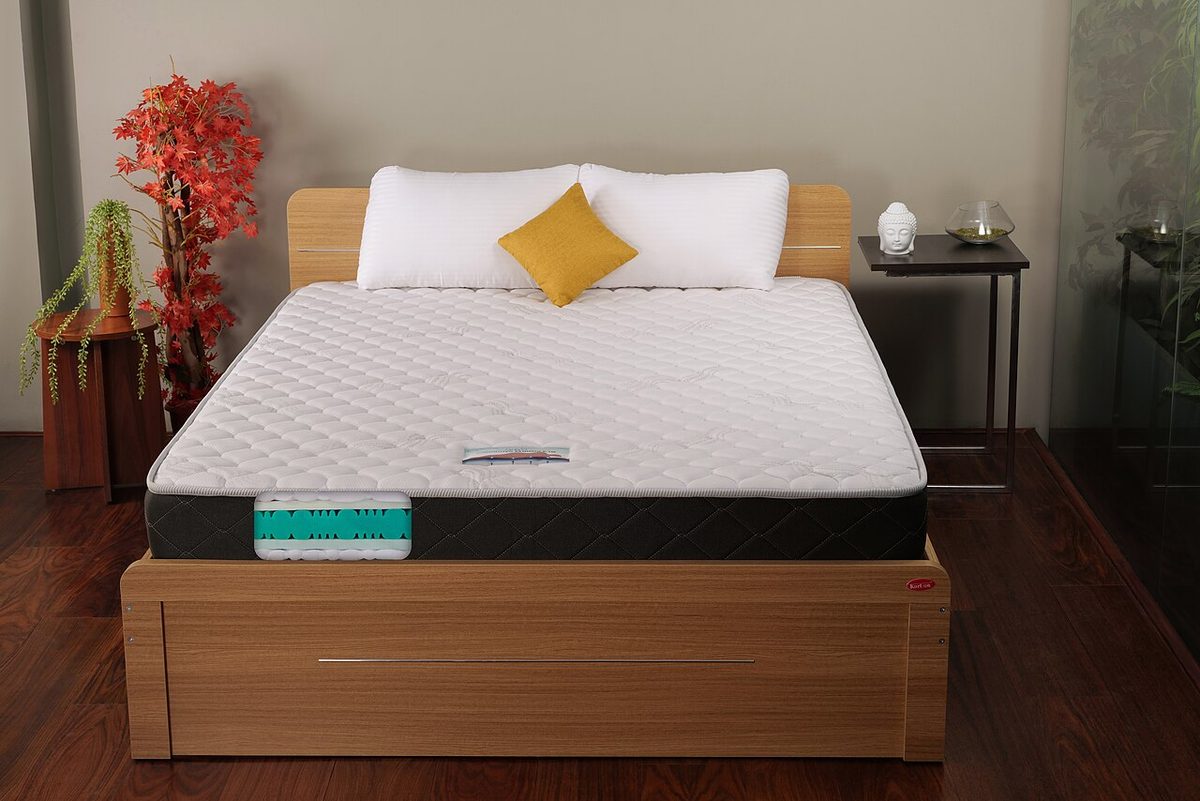
The main types, in plain terms
The feel also depends on what is inside. These are the broad categories you will see:
| Type | Typical feel | Worth knowing |
|---|---|---|
| Innerspring | Firmer, bouncy | Coils give support and airflow under thin top layers |
| Memory foam | Softer, contouring | Molds to the body; some models sleep warm |
| Latex | Firm, responsive | Springy and durable; tends to sleep cooler |
| Hybrid | Varies | Coils with foam or latex on top, a middle path |
None of these is better in the abstract. They are different ways to reach a feel you like. Read firmness as a rough guide and expect to test the actual bed.
How to test before you commit
Showroom minutes are not enough, but they are a filter. Lie down in your normal sleeping position, not on your back out of politeness, and stay there for ten minutes or more. Notice whether your lower back feels filled or hollow, and whether your shoulder and hip feel pressed or cradled.
The only test that counts is how a bed feels to you, in your usual sleeping position, over more than a few minutes.
Because feel is personal, a home trial is the real test. Many mattresses are sold with a trial period of several weeks to a few months and a return option. Give a new bed at least a couple of weeks before you judge it; your body adjusts, and the top layers settle. Keep the paperwork and note the return deadline so a wrong guess is not permanent.
The rest of the setup matters too
A mattress does not work alone. The base under it changes the feel: a solid platform or closely spaced slats makes most beds feel slightly firmer and more supportive, while a worn box spring or wide-gapped slats can let an otherwise good mattress sag in the middle. Check what the maker recommends, because the wrong base can void a warranty and undo the firmness you chose.
Your pillow does as much as the mattress to keep your neck in line with the rest of your spine, and the right height depends on the same thing as the mattress: your sleeping position. Side sleepers usually need a thicker pillow to fill the gap between the shoulder and the head, back sleepers a medium one, and front sleepers a thin one or none. A bed that feels slightly off is sometimes a pillow problem, not a mattress problem, so it is worth adjusting that first.
Finally, give yourself room to be wrong. Firmness preference drifts over the years and with changes in weight, so the choice that suits you now may not in a decade. Buying from a seller with a fair trial and a clear return window costs nothing extra and takes the pressure off getting it perfect on the first night.
Photo credits
- Photo: Basile Morin / Wikimedia Commons, CC BY-SA 4.0
- Photo: Manishl33 / Wikimedia Commons, CC BY-SA 4.0
TrendGuides writes about product categories and methods, not about specific brands or models. We do not accept payment for placement. Read our editorial standards and affiliate disclosure.