How to organize a small kitchen
A small kitchen works when every item has a home near where you use it. Here is how to set that up without buying a wall of plastic bins.
By TrendGuides Editors · September 29, 2026 · 4 min read
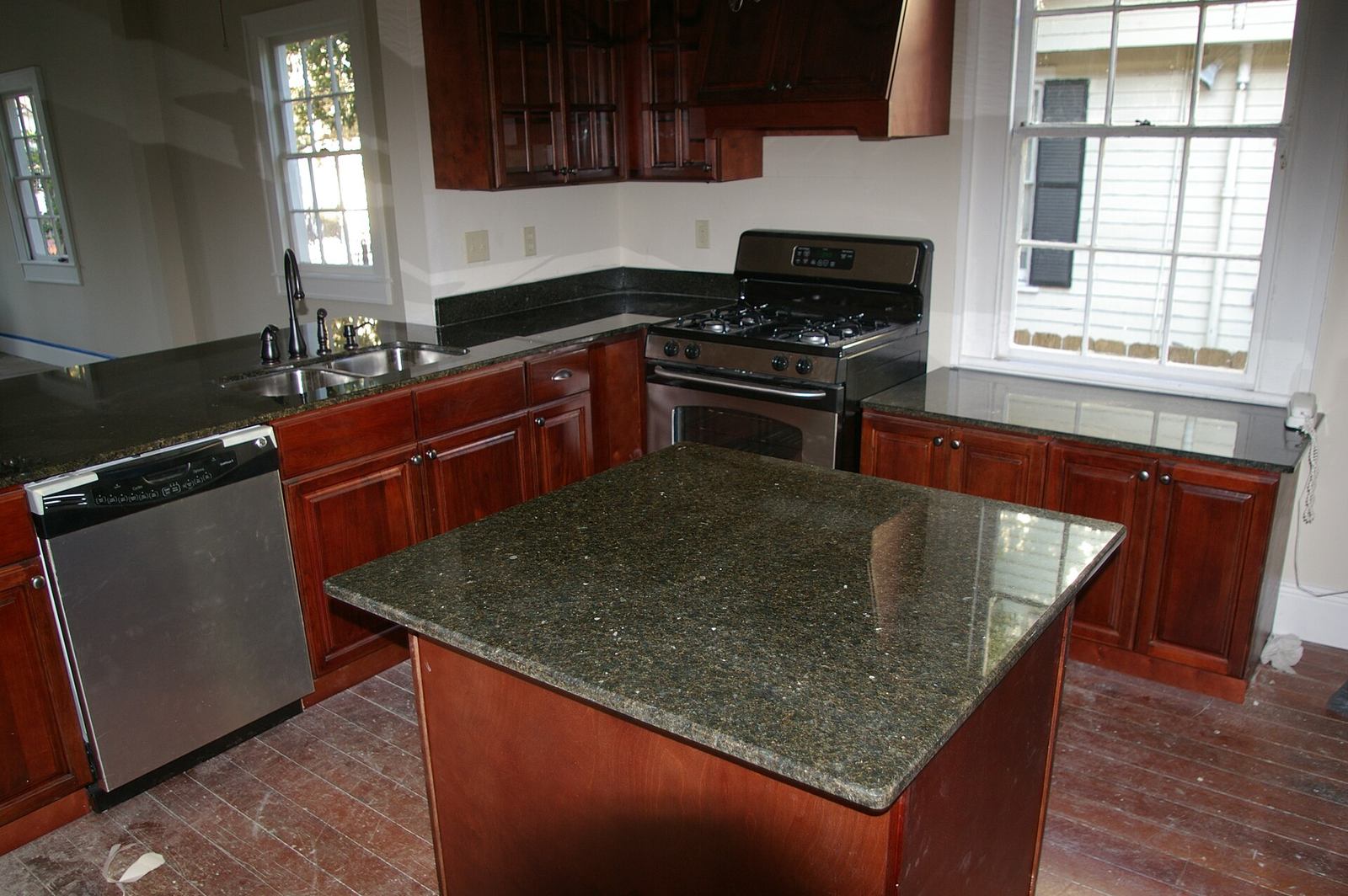
A cramped kitchen is rarely short on space so much as short on system. When counters disappear under things that have no home and the back of every cupboard is a mystery, cooking feels harder than it is. The fix is less about buying organizers and more about deciding where each thing lives, based on how often you reach for it.
Start by taking everything out
Empty one zone at a time, a cupboard or a drawer, rather than the whole kitchen at once. Pull everything out, wipe the shelf, and be honest about what you actually use. The duplicate peeler, the gadget from a recipe you made once, the chipped mugs you keep out of habit: these are what eat the space you need. Set them aside to donate or recycle before anything goes back.
Group what is left by how you use it, not by type. The things you touch every day are one pile; the holiday roasting pan and the spare blender jar are another.
Store by frequency and by zone
The guiding rule is simple: the more often you use something, the easier it should be to reach. Everyday plates, your favorite pan, and the knife you cook with belong at waist-to-eye height, near the spot where you use them. Rarely used items go high or deep.
- Keep pots and pans near the stove, and cutting boards and knives near your prep area.
- Put mugs and glasses in the cupboard closest to the kettle or the sink.
- Store the things you reach for daily between hip and shoulder height.
- Send seasonal and bulky items to the highest shelves or the back.
Use the space you are ignoring
Small kitchens usually have vertical and hidden space going to waste. A few cheap additions open it up:
- Add a shelf riser inside a cupboard to double the usable height for plates and bowls.
- Hang hooks under a shelf or on a wall rail for mugs, measuring cups, and utensils.
- Fit a narrow rack inside a cabinet door for spices, foil, or cleaning spray.
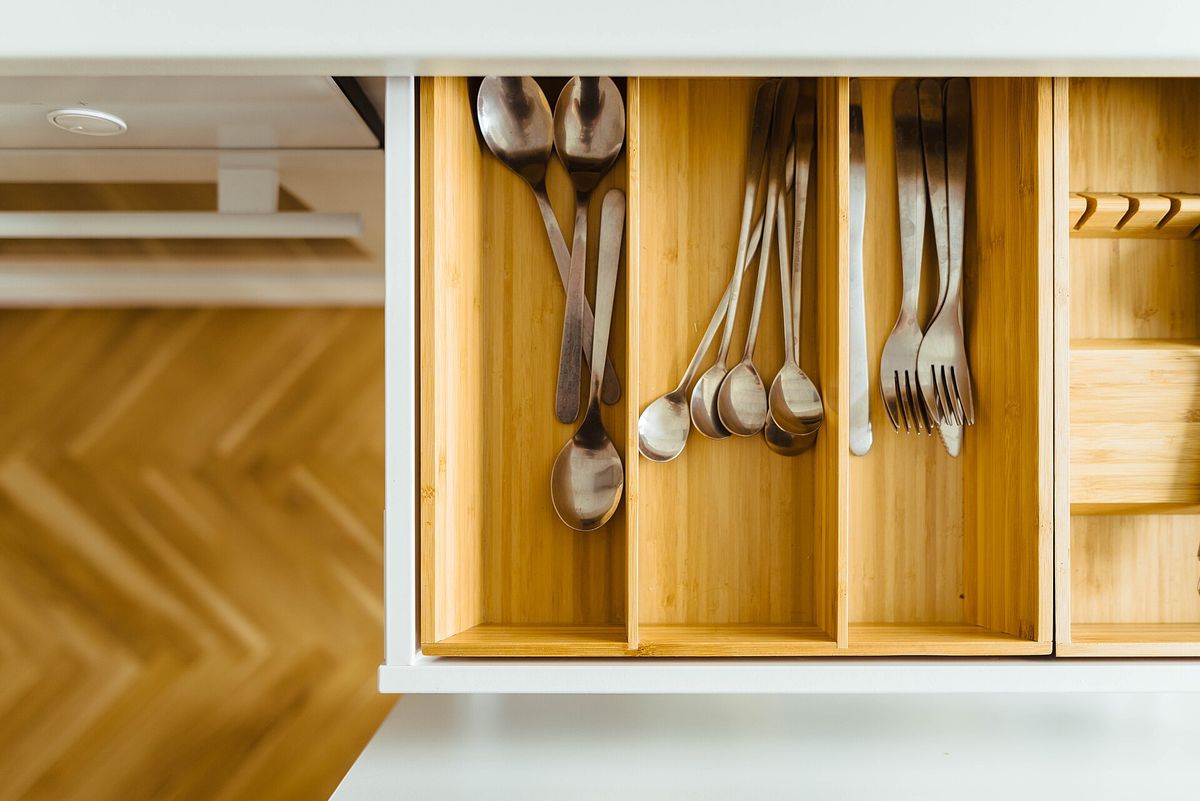
- Use drawer dividers so forks, knives, and tools stop sliding into one heap.
The point of each of these is the same: make items visible and reachable so you stop buying duplicates of things you already own but cannot find.
The more often you use something, the easier it should be to reach.
Keep the counter clear
Counter space is the thing a small kitchen has least of, so protect it. Keep only what you use most days on the surface: the kettle, maybe a knife block, the oil you cook with. Everything else, however nice, goes in a cupboard. A clear counter is not just tidier; it gives you room to actually prep, which is the whole point of the kitchen.
Lids are their own small battle. Store them upright in a rack or a drawer rather than nested with the pots, so you are not lifting out five pans to find the one you need. Stack pots by size inside each other and keep the matching lids in one place.
Fit the storage to how you cook
Generic advice only goes so far, because the best layout depends on what you actually make. If you cook from scratch most nights, the knives, boards, oils, and the pans you use daily deserve the prime spots, and the baking tins can live out of the way. If you mostly reheat and assemble, containers, plates, and the microwave zone matter more. Spend your best storage on the tools your real week uses, not the ones a tidy showroom kitchen shows.
Watch yourself cook for a few days before committing to a layout. Notice where you stand to chop, where the clean dishes land, and which cupboard you open most. People reorganize into a plan that looks neat and then fight it for months because it ignores how they move. The goal is fewer steps between the sink, the stove, and the prep area, which is where most of the back-and-forth happens.
Clear containers earn their place here. Moving dry goods like flour, rice, and pasta into matching jars you can see through means you know at a glance what you have and what is running low, and uniform shapes stack far better than a jumble of half-empty bags. It is not about looking neat; it is about not buying a third bag of rice because the first two were hiding at the back.
Keep it that way
An organized kitchen drifts back to chaos without a light routine. Put things back in their homes as you cook, run a quick reset at the end of the day, and once a season pull out the items that crept in and never earned their spot. The system only works if returning something is as easy as grabbing it.
Photo credits
- Photo: MeRyan / Wikimedia Commons, CC BY 2.0
- Photo: Jarosław Ceborski jarson / Wikimedia Commons, CC0
- Photo: FASTILY / Wikimedia Commons, CC BY-SA 4.0
TrendGuides writes about product categories and methods, not about specific brands or models. We do not accept payment for placement. Read our editorial standards and affiliate disclosure.