Choosing your first chef's knife and keeping it sharp
One good chef's knife does most of the work in a kitchen. Here is how to choose a first one and the simple routine that keeps it sharp.
By TrendGuides Editors · October 23, 2026 · 4 min read
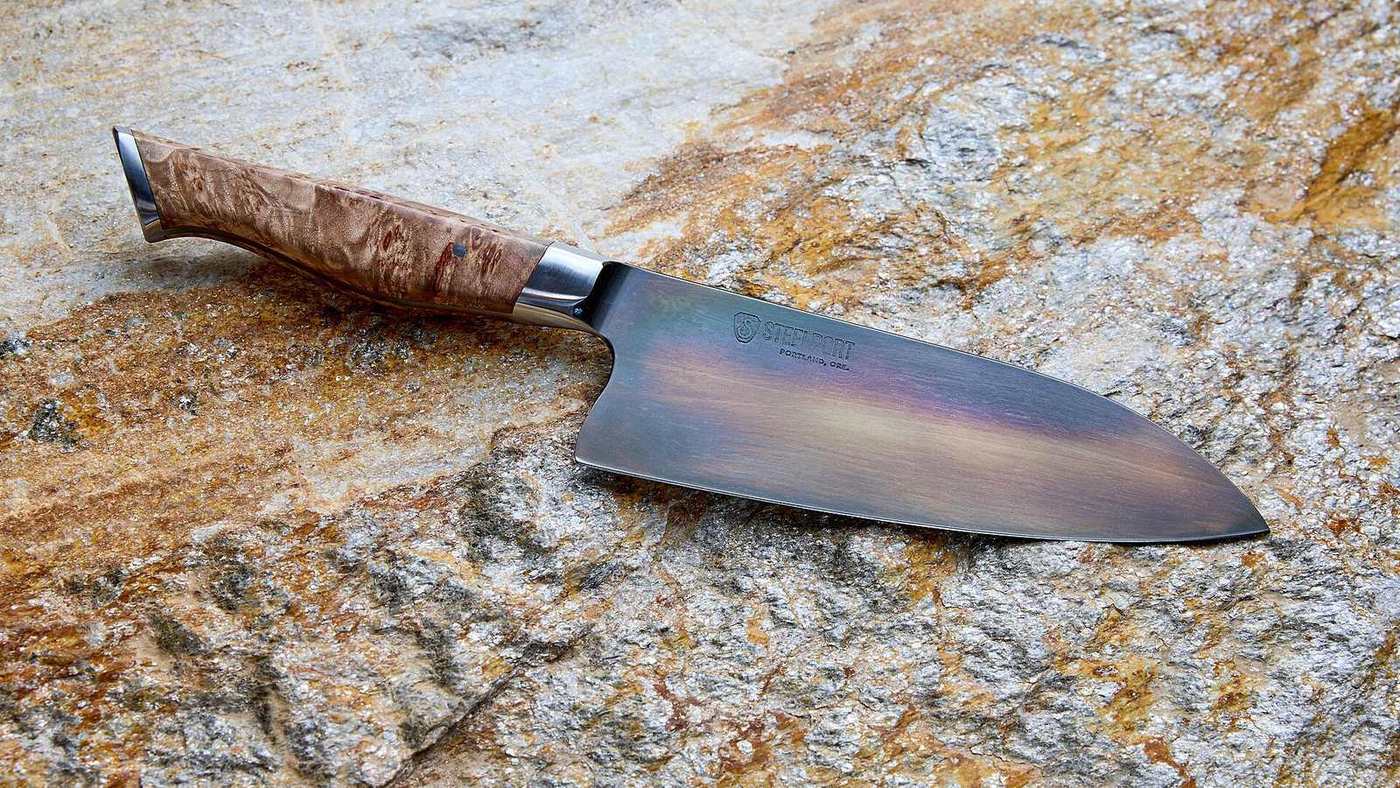
If you buy one knife, make it a chef's knife. It does the great majority of kitchen cutting, from chopping onions to breaking down a chicken, and a single good one is worth more than a block full of knives you never touch. Choosing a first chef's knife comes down to size, the broad style, and how it feels in your hand, and keeping it useful comes down to a short routine most people skip.
Size and the two broad styles
An eight-inch blade is the standard first choice. It is long enough for most jobs and still manageable; six inches can feel small for anything big, and ten inches intimidates people into leaving it in the drawer. Beyond size, most knives fall into two camps.
- German-style knives are heavier, with a curved edge made for rocking back and forth and softer steel that is durable and easy to re-sharpen.
- Japanese-style knives are lighter and thinner, with harder steel that takes a keener edge and holds it longer, but chips more easily and asks for a bit more care.
Neither is better for a beginner in the abstract. A heavier German knife feels reassuring and forgiving; a lighter Japanese knife feels nimble. The one that makes you want to cook is the right one.
Judge it by hand, not by the label
Handle a knife before you trust it. Pick it up, hold it the way you would to chop, and notice whether it feels balanced or tips toward the blade or handle. A comfortable grip matters more than the brand or the steel on paper, because a knife that feels awkward is one you will not reach for.
- Check the weight and balance; it should feel like an extension of your hand, not a hammer.
- Make sure the handle suits your grip, whether you hold the handle or pinch the blade.
- Look for a smooth spine, the top edge, so it does not dig into your fingers during long prep.
- Do not pay for a big block set; a chef's knife, a paring knife, and a serrated bread knife cover almost everything.
The one that makes you want to cook is the right one.
Honing versus sharpening
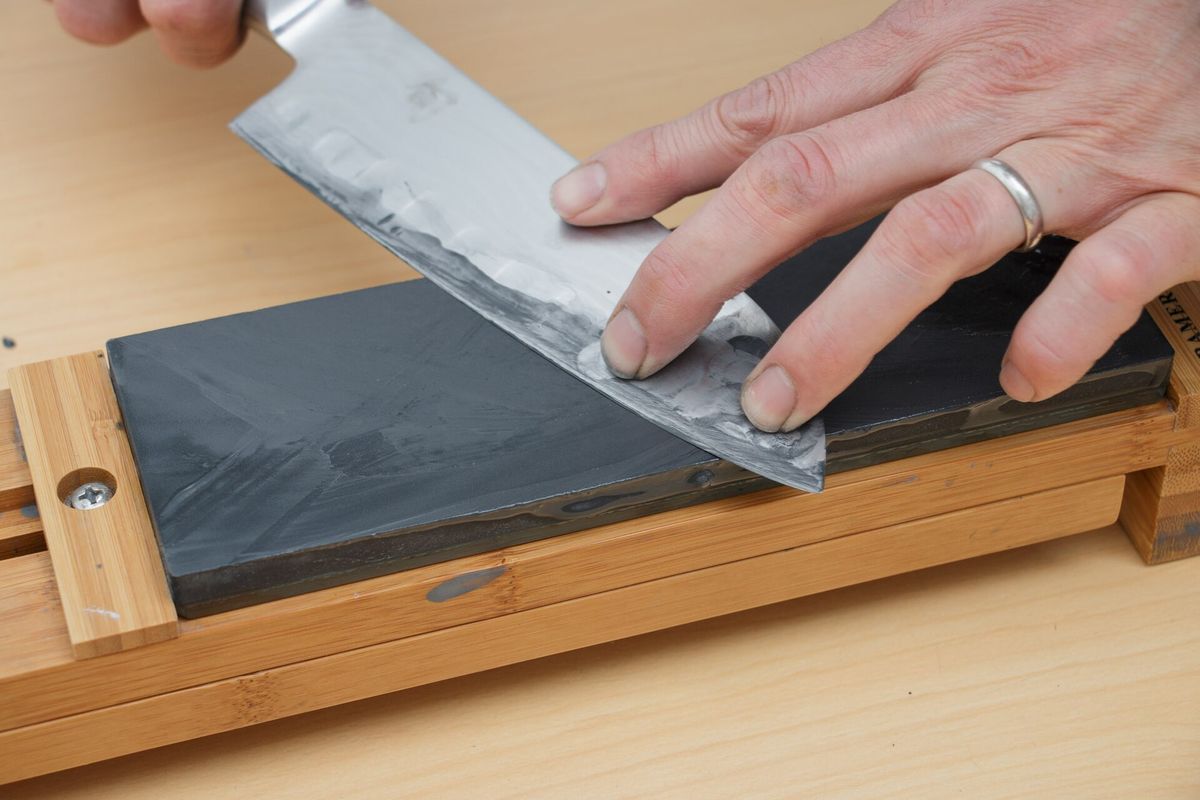
These are different jobs and people confuse them constantly. Honing straightens an edge that has rolled slightly out of line, and you do it often, even every few uses, with a honing steel. It does not remove metal and does not fix a truly dull knife. Sharpening grinds a new edge, and you do it occasionally, when honing no longer helps, with a whetstone, a pull-through sharpener, or by sending it out.
A whetstone gives the best result and is worth learning. Soak it if the type calls for it, hold the blade at a steady angle of roughly 15 to 20 degrees, and draw the edge across the stone from coarse grit to fine. A few minutes every month or two keeps a knife genuinely sharp, and a sharp knife is safer than a dull one because it bites where you aim it instead of slipping.
A board and a steady grip
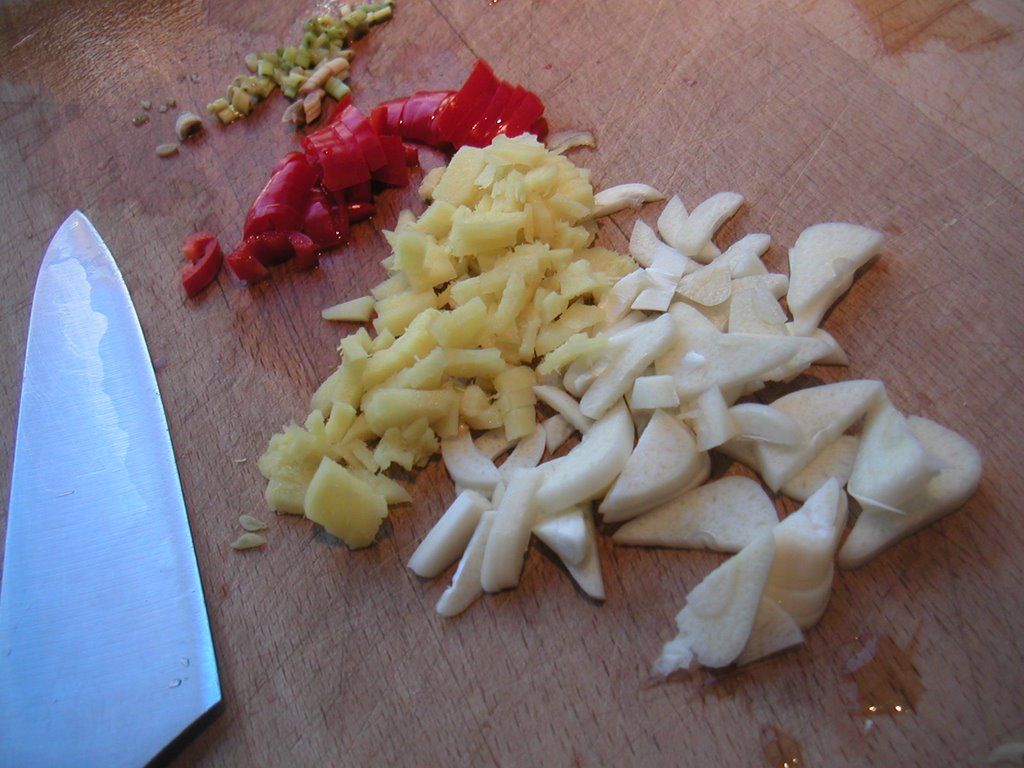
A knife is only half the setup; what you cut on matters almost as much. Use a wooden or soft plastic board, which gives slightly under the edge and keeps it keen, and avoid glass, stone, marble, or metal, which are hard enough to dull or chip a blade in a single session. A damp cloth or a thin mat under the board stops it sliding, which is both safer and steadier.
How you hold the knife changes how well it cuts and how safe you are. Most cooks get more control from a pinch grip, holding the blade itself between thumb and forefinger just ahead of the handle, rather than gripping the handle alone. Your other hand guides the food with fingertips curled under and knuckles forward, so the flat of the blade rides against them and the tips stay clear. It feels awkward at first and becomes second nature fast.
Let the knife do the work. A sharp blade needs almost no downward force; you guide it and it slices, which is less tiring and far safer than sawing or pressing hard with a dull one. If you find yourself forcing cuts, the answer is almost always a quick hone or a sharpen, not more muscle.
Treat it well
Most knives die slowly from careless habits, not from use. A few rules keep an edge for years:
- Wash it by hand and dry it right away; the dishwasher dulls and corrodes blades and bangs them against other items.
- Cut on wood or plastic, never glass, stone, or metal, which wreck an edge fast.
- Store it on a magnetic strip or in a block or guard, not loose in a drawer where it knocks around.
- Hone before a big prep session and sharpen when honing stops bringing the edge back.
Photo credits
- Photo: Frank Schulenburg / Wikimedia Commons, CC BY-SA 4.0
- Photo: Didriks / Wikimedia Commons, CC BY 2.0
- Photo: cyclonebill / Wikimedia Commons, CC BY-SA 2.0
TrendGuides writes about product categories and methods, not about specific brands or models. We do not accept payment for placement. Read our editorial standards and affiliate disclosure.